


 Decking Screws
 Drilling Screws


Best screws for outdoor decking and timber projects
No single screw wins for every project. The best screws for decking depend on the board material and whether the fastener holds boards or framing. Corrosion resistance, material compatibility, screw size, thread design, and head type decide the match. Stainless steel grades 304 and 316 suit different exposures. This guide pairs screws for outdoor decking with each wood deck and composite option, plus a selection checklist.
Key Takeaways
- Match the screw to your deck material for a strong, lasting hold.
- Choose stainless steel screws for wet or coastal areas to prevent rust.
- Use deck screws for boards and structural screws for framing to keep your deck safe.
Best screw type for each wood deck material
The best screw type for each wood deck material depends on the board and the application. No universal pick exists. Density, moisture behavior, and treatment chemicals each change what a fastener must do.
Why material dictates the screw
Pressure-treated lumber on a wood deck carries treatment chemicals that raise corrosion risk on weaker fasteners. These boards also move as they dry, and over-driven fasteners cause splitting. Cedar and redwood have softer fibers that can strip, and visible fasteners distract from the finish. Dense hardwoods demand higher installation torque and carry greater splitting risk. Composite boards expand and contract with temperature, and surface fasteners disrupt the appearance. PVC moves more than most decking materials, so fastener pop-out is a real concern.
Screw design must match wood density. Serrated threads and cutting notches reduce driving torque in denser wood. Wood screws for decks use deep, aggressive threads and self-drilling points to bite into cedar, redwood, hardwood, and treated fibers. Corrosion resistance remains a top priority outdoors. Coated screws suit inland decks, while stainless steel grades 304 and 316 derive protection from the metal itself.
Boards versus framing
Deck screws and construction screws serve different jobs. Board fasteners are built for weather-exposed decking, fencing, and porches. Construction screws are hardened fasteners for framing, sheathing, and subfloor. Board fasteners are not intended for structural framing.
| Feature | Board fasteners | Construction screws |
|---|---|---|
| Primary use | Outdoor decking and fencing | Structural framing and heavy joints |
| Material | Stainless or coated carbon steel | Hardened steel |
| Thread design | Sharp, coarse threads | Aggressive clamping threads |
| Head type | Bugle head, sits flush | Often Torx or square drive |
| Best for | Weather-exposed projects | Load-bearing connections |
Match the screw to the board first, then confirm it suits the framing connection.
Best deck screws for wood decks
Pressure-treated lumber
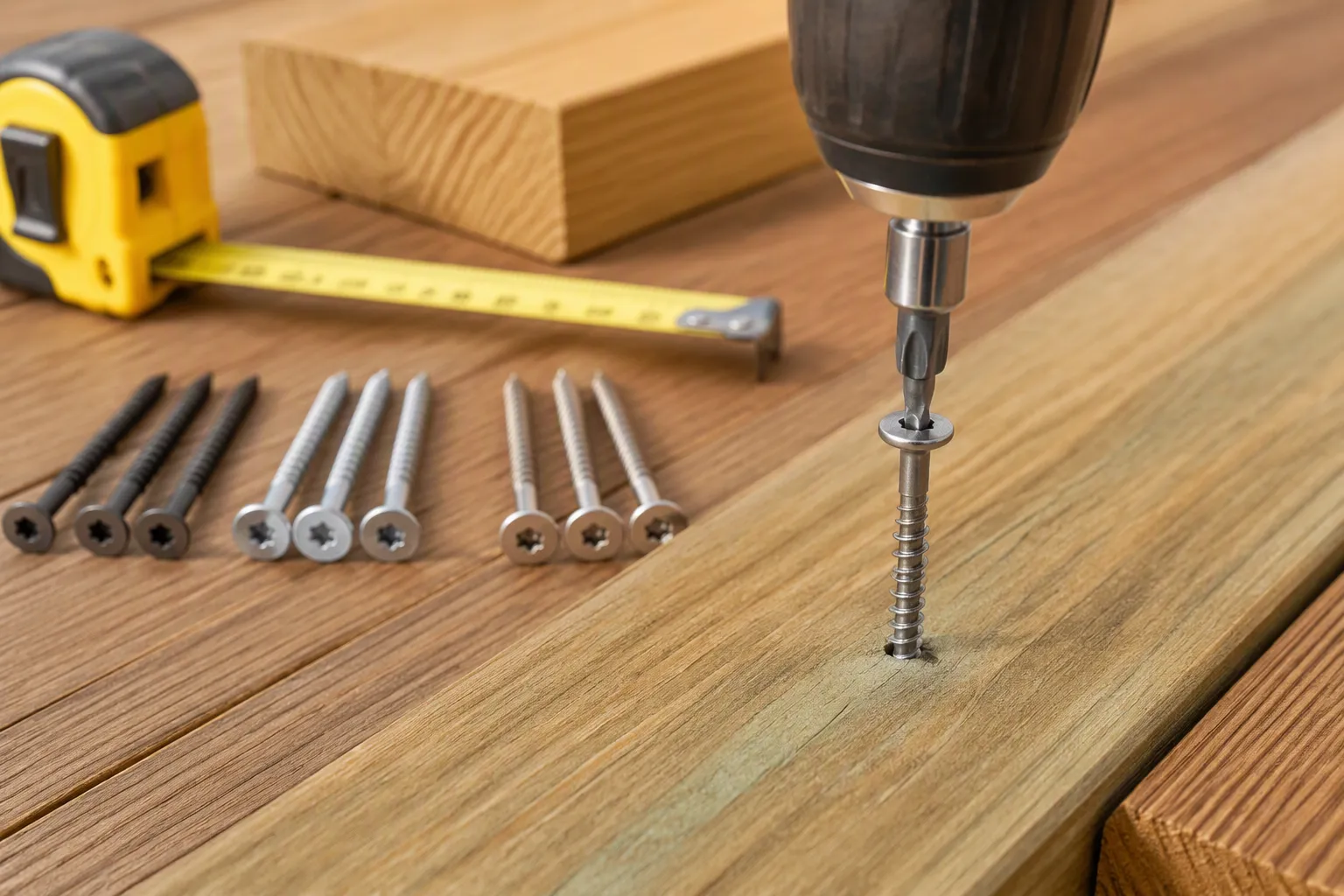
The common recommendation for pressure-treated lumber is a #10 x 3-inch coated deck screw with a coarse thread. This size suits standard board thickness, and the coarse thread bites into treated fibers for holding power. The coating adds corrosion resistance against treatment chemicals. Screw length should follow board thickness, and every screw should penetrate at least 1 inch into the joist.
| Deck Board Thickness | Recommended Screw Length | Screw Gauge | Screw Type |
|---|---|---|---|
| 5/4" (1.25") deck boards | 2 ½" | #8 | 18-8 or 316 stainless |
| 1 ½" deck boards | 3" | #10 | 18-8 or 316 stainless |
| 2" nominal lumber | 3 ½" | #10–#12 | 316 stainless preferred |
Fastener choice matters on pressure-treated wood decks. Hot-dipped galvanized zinc is the only approved zinc coating for fasteners in pressure-treated wood, and thinner electroplated zinc coatings corrode faster. Stainless steel fasteners resist corrosion and are approved by the international building code for treated lumber. Proprietary coatings work if they meet or exceed hot-dipped performance per ASTM A153.
If the specified chemical retention level in the treated wood exceeds certain thresholds, stainless steel, copper, or silicone bronze fasteners are recommended. Ground Contact thresholds: 0.40 pcf for ACQ, 0.34 pcf for MCQ, 0.21 pcf for CA-B, 0.15 pcf for CA-C and MCA, 0.14 pcf for μCA-C.
Best screw for my wood deck: hardwood and cedar
Dense hardwood decking such as ipe demands more from a fastener. Pre-drilling is necessary for hardwood decking because it prevents screws from breaking and boards from splitting. Testing across screw, fastener, and wood types found pre-drilling produces the best results regardless of the combination used. Countersinking keeps heads flush and protects the surface.
A high-quality Torx-drive stainless screw is a reliable all-around solution for ipe installation. Where maximum hold is needed, hot-dip galvanized fasteners offer a durable alternative. For the best screws for cedar, choose a sharp point and a bugle head that sits flush without crushing soft fibers. A hardwood decking screw with a Type 17 point speeds installation in dense stock.
Match the fastener to the board, then confirm coating and sizing before purchase. The right deck screws keep wood decks stable through seasons of moisture and load.
Screws for composite decking
Composite boards need fasteners made for them. A regular wood deck screw has a large head that cannot compress the dense material beneath it. The material pushes outward and upward instead, and the surface distorts. This is mushrooming, and it spoils the look of any composite decking installation.
Only composite decking screws should be used for composite decking. They are designed for the denser board with smaller heads and threads suited to the material. Regular wood screws lack the same grip and may cause cracking or warping.
Hidden fasteners versus face screws
Hidden fastener systems leave an unblemished surface and hold a consistent gap for airflow and drainage. They cost more in materials and take slightly longer to install. Clip systems also slow individual board replacement, since a repair may require loosening several clips.
Face screws are cheaper and faster. Color-matched heads conceal the fastener, and each board lifts out easily for repair. Direct screwing into joists is also the strongest fastening method. Choose face screws for tight budgets, heavy structural use, or projects where speed matters more than looks. Choose hidden fasteners for a premium finish on composite decking with adequate clearance and ventilation.
Preventing mushrooming
Proper installation starts with the right composite decking screw. Look for a small head and an extra set of reverse threads that pull material back down as the head seats.
- Pre-drill holes with a countersink bit so the screw sets in cleanly.
- Pre-drill with a 1/8 inch bit before placing a screw closer than 1 inch from an end or edge.
- Countersink the head flush with the surface.
Never hammer or tap down mushroomed material. This ruins the appearance of the composite decking. For coastal projects, stainless steel trim-head screws offer corrosion resistance, and a stainless steel trim-head screw works well where salt air is a concern. Stainless steel grades 304 and 316 both suit wet exposures. Match the fastener to the board, and the decking will stay clean for years.
Screws for outdoor decking: framing and structure
Structural screws versus deck screws
Framing carries the load of the entire deck, so it demands a different fastener than the boards above it. Structural screws are engineered for load-bearing connections such as joist hangers, ledger boards, and beam attachments. They have thicker shanks, hardened steel bodies, and heads that accept high torque without cam-out. Standard deck screws are built for holding boards to joists, not for carrying structural loads. Using a board fastener in a framing connection leaves the joint under-specified.
The distinction matters most at connections hidden from view. A ledger board that pulls away from the house is a serious failure, and the fastener at that joint must meet the engineer's specification. Structural screws for outdoor decking are typically rated and labeled for their load capacity. Confirm the rating before substituting one product for another.
Sizing for load and length
Screw size, length, and diameter must match the board and the joist beneath it. Length is measured from the surface of the material to the point, and gauge refers to the shank diameter. A general woodworking rule of thumb holds that a screw should be at least twice the thickness of the thinnest piece being joined. Every screw should also penetrate at least 1 inch into the joist.
| Deck Board Thickness | Recommended Screw Length | Screw Gauge |
|---|---|---|
| 5/4" (1.25") deck boards | 2 ½" | #8 |
| 1 ½" deck boards | 3" | #10 |
| 2" nominal lumber | 3 ½" | #10–#12 |
| Composite decking | 2 ½" – 3" | #10 |
Use #8 gauge for standard 5/4" boards. Step up to #10 for thicker or denser material. On a wood deck, stainless steel fasteners resist corrosion at framing joints exposed to moisture. Stainless steel also suits coastal decking projects where salt air accelerates rust.
How to choose outdoor deck screws
Corrosion resistance and stainless steel deck screws
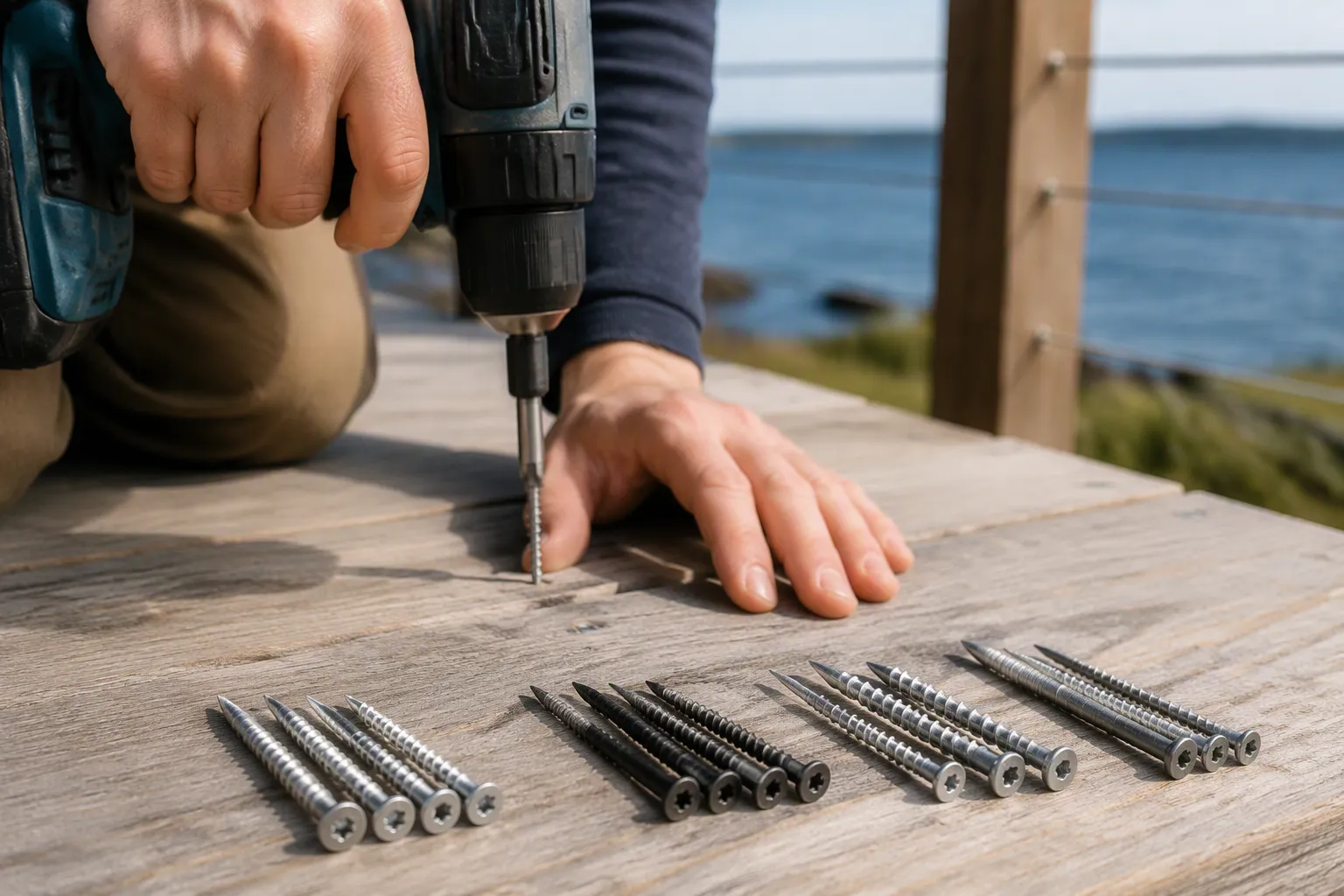
Outdoor exposure punishes fasteners. Moisture, salt air, and treatment chemicals all attack the metal. Coating quality decides how long a screw lasts. Hot-dipped galvanized zinc and proprietary weather-resistant coatings both provide reliable protection from the elements. Stainless steel is not required for general outdoor use outside coastal or marine areas.
Stainless steel deck screws make sense in specific conditions. Around bodies of water, stainless steel is the only fastener to use. Coastal and marine environments call for #316 stainless steel, which is rated for those exposures. Stainless steel also holds its corrosion resistance if the surface is scratched during installation. Coated screws lose protection at a scratch.
| Condition / Environment | Recommended Screw Type | Reason |
|---|---|---|
| Around bodies of water | Stainless steel | Naturally corrosion resistant; the only fastener for these sites |
| Coastal and marine environments | #316 stainless steel | Rated for marine and coastal conditions |
| General outdoor use, inland | Coated screws | Reliable protection; stainless steel not required |
| Scratch damage during installation | Stainless steel | Protection is not diminished by surface scratches |
Quality stainless steel fasteners carry traceable material records. FUERTE runs in-house corrosion and tensile testing on its production, which gives buyers a verifiable check on coating performance and strength.
Thread, head, and drive types
Thread design follows the board material. Coarse threads build stronger connections in softwood. Fine threads suit hardwood. High-low threads reduce stripping in composite and manufactured decking. A dual-action auger speeds installation, and a double reverse thread prevents mushrooming on composite boards.
Head and drive choices complete the selection. Countersunk heads sit flush. Bugle heads add a low profile that minimizes snagging. Pan heads spread load on softwood. Star drive gives a stronger tool-to-fastener connection for high torque, and Phillips drive reduces overdriving and splitting.
- Drive styles: star drive for high torque; Phillips drive to limit overdriving
- Thread types: coarse for softwood; fine for hardwood; high-low for composite
- Head features: countersunk for a flush finish; bugle for a low profile
Confirm screw size against board thickness before ordering. A quality deck screw matches thread, head, and coating to the material. These criteria apply to screws for outdoor decking on any wood deck or decking project.
Match the screw to the deck material first. Confirm corrosion resistance next. Verify size, thread, and head last. Boards and framing need different fasteners, so check coating ratings and material compatibility before buying. Stainless steel suits wet sites. Confirm your wood deck or decking material and application, then select screws with these criteria.
FAQ
What size screw should I use for composite decking?
Composite boards typically take a #10 screw between 2 ½ and 3 inches long. Confirm the length against board thickness and keep at least 1 inch of penetration into the joist.
Do I need stainless steel screws for an inland deck?
Not always. Coated screws provide reliable protection for general outdoor use away from the coast. Reserve stainless steel for coastal sites, marine exposures, or bodies of water.
Can deck screws be used for framing?
No. Board fasteners hold decking to joists and are not rated for structural loads. Framing connections such as ledgers and hangers require structural screws with a stated load rating.