


 Decking Screws
 Drilling Screws


Full Thread vs Partial Thread Wood Screws
The main difference between full thread vs partial thread wood screws lies in their thread coverage and application. Choosing the correct screw improves installation performance and durability.
-
Different screw types offer varying strengths and brittleness for woodworking and drywall.
-
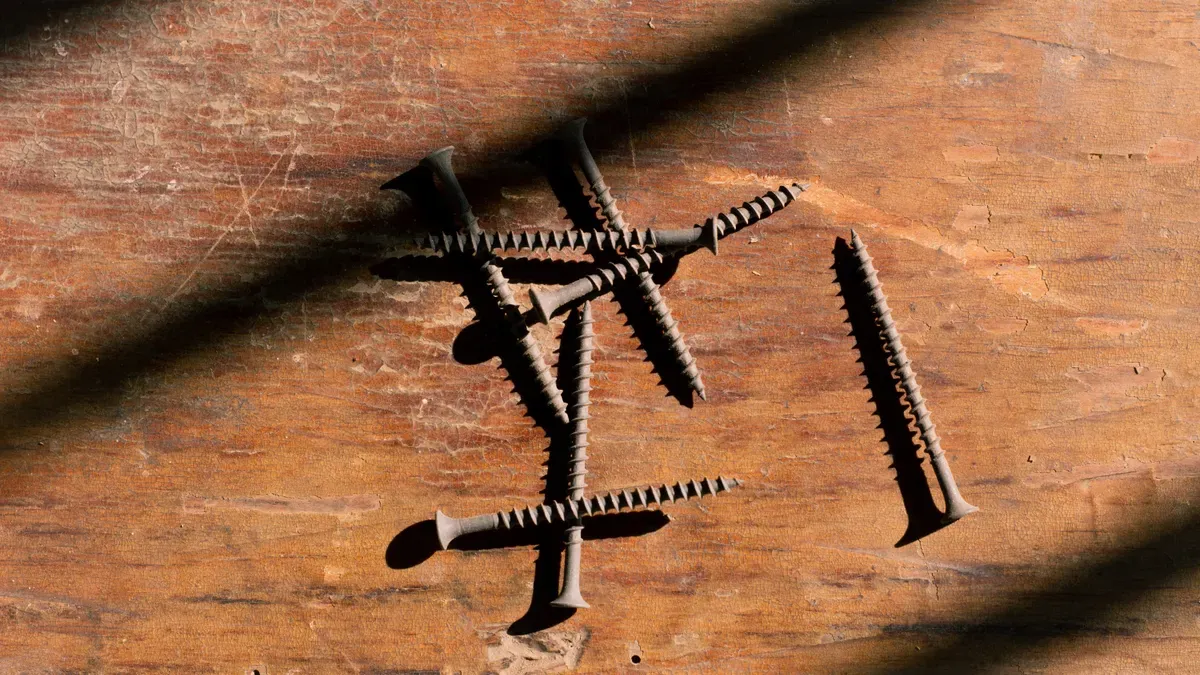
Fuertes Crew Black Phosphate Drywall Screws provide reliable grip and quick installation for wooden studding.
Key Takeaways
-
Full thread screws provide maximum grip and stability, making them ideal for thinner materials and applications where resistance to loosening is crucial.
-
Partial thread screws excel at pulling thicker materials together, offering strong clamping force for projects like furniture making and framing.
-
Choosing the right screw type depends on your project's material, thickness, and load requirements; always match screw length to the thickness of the materials being joined.
Full Thread vs Partial Thread Wood Screws: Key Differences
What Are Full Thread Screws
Full thread wood screws feature threads that run from the tip all the way to the head. This design maximizes surface contact with the material, providing a secure fit and reducing the risk of loosening over time. Full thread screws are commonly used in situations where consistent grip strength is essential. The threads help distribute force evenly, making these screws ideal for joining thinner materials or for applications where the connection must remain tight under stress.
The materials used for full thread wood screws influence their performance and durability. The table below highlights common materials and their characteristics:
|
Material |
Performance Characteristics |
Best Use Cases |
|---|---|---|
|
Steel |
Strong, affordable, available in various sizes; can be brittle under high stress |
Indoor woodworking and DIY projects |
|
Carbon Steel |
Heat treated for hardness and toughness; suitable for high torque applications |
Construction and deck projects |
|
Silicon Bronze |
Excellent rust and corrosion resistance; stronger than brass |
Outdoor projects, especially in wet areas |
|
Stainless Steel |
Good corrosion resistance; available in grades for different environments |
Marine applications and severe conditions |
Full thread screws are often chosen for their reliability in both indoor and outdoor projects. Their structure ensures that the screw remains firmly anchored, even when subjected to vibration or movement.
What Are Partial Thread Screws
Partial thread wood screws have threads only on a portion of the shaft, leaving a smooth section near the head. This smooth part allows the screw to pull two pieces of wood tightly together, creating a strong clamping force. Partial thread screws excel in applications where joining thicker materials is necessary, such as attaching wooden boards or framing.
The smooth section of partial thread screws reduces friction between the joined pieces, allowing for tighter connections. However, careful sizing is important. If the smooth part extends too deep into the material, it can cause bulging or splitting. Partial thread screws are preferred when the goal is to draw materials together without separating them.
Thread Length & Structure
The thread length and structure play a critical role in the holding power of wood screws. Longer screws penetrate deeper into the material, increasing the strength of the connection. A common guideline recommends that the screw length should be at least twice the thickness of the thinnest piece being joined. This ensures a secure hold and prevents the joint from failing under load.
The structure of full thread vs partial thread wood screws affects their performance in different scenarios:
-
Fully threaded screws provide a secure fit and resist loosening, but can cause jacking, which separates materials if not clamped properly.
-
Partially threaded screws offer better clamping by pulling materials together tightly, thanks to the smooth section.
-
Longer screws enhance holding power by reaching deeper into wood, making them suitable for heavy-duty applications.
Choosing between full thread vs partial thread wood screws depends on the specific requirements of your project. Consider the material, desired grip strength, and the thickness of the pieces being joined to ensure optimal results.
Performance & Uses
Grip Strength & Holding Power
Grip strength and holding power are critical factors when selecting wood screws for any application. Full thread screws provide maximum grip because the thread runs the entire length of the screw. This design allows the screw to engage with the material at every point along its shaft, creating a secure connection. Full thread screws work best in thinner materials or when you need to prevent loosening over time.
Partial thread screws, on the other hand, have a smooth section near the head. This feature allows the screw to pull two pieces of wood tightly together, making them ideal for joining thicker boards. The smooth shank reduces friction between the joined pieces, resulting in a strong clamping force. This is especially important in woodworking projects where a tight joint is necessary for structural integrity.
The Fuertes Crew Black Phosphate Drywall Screws for Wooden Studding demonstrate excellent grip strength in drywall installation. Their deep, coarse thread ensures a strong bite into wooden studs, providing reliable holding power and reducing the risk of loosening. The sharp point and bugle head design also make installation quick and efficient, which is essential for both professionals and DIY users.
Sideways Force & Stability
Wood screws must resist not only direct pull-out forces but also sideways or shear forces. The type of thread and screw design affects stability under these conditions.
-
Full thread screws offer enhanced resistance to sideways forces. The continuous thread engagement along the entire shaft helps distribute force evenly, making these screws suitable for applications where stability is crucial.
-
Partial thread screws provide strong clamping power. The unthreaded portion allows for some movement, which can be beneficial in shear connections where flexibility is needed.
The following table summarizes the stability outcomes for each screw type in load-bearing projects:
|
Screw Type |
Characteristics |
Stability Outcome in Load-Bearing Projects |
|---|---|---|
|
Full Thread |
Threads run the entire length, providing maximum grip and even force distribution in thinner materials. |
Offers maximum grip, enhancing stability in thinner materials. |
|
Partial Thread |
Threads only on part of the shank, ensuring tight and stable joints in thicker wood components. |
Ensures tight joints, allowing for effective force-locking in thicker materials. |
When installing drywall onto wooden studding, the Fuertes Crew Black Phosphate Drywall Screws excel due to their deep thread and robust design. These screws maintain stability under load, making them a preferred choice for both wall and ceiling applications.
Typical Applications
Choosing the right screw depends on the specific application and material involved. Here are some practical examples of where each screw type excels:
-
Full thread screws are ideal for:
-
Attaching thin boards or panels where maximum grip is needed.
-
Projects that require resistance to vibration, such as shelving or cabinetry.
-
Securing drywall to wooden or metal studs, especially when using coarse-thread screws like the Fuertes Crew Black Phosphate Drywall Screws.
-
-
Partial thread screws are best suited for:
-
Joining thick wooden components, such as in furniture making or framing.
-
Applications where a tight clamping force is necessary to pull materials together.
-
Structural woodworking where force-locking and stability are priorities.
-
Tip: Always match the screw length to the thickness of the materials being joined. For drywall installation, select a screw long enough to penetrate the stud securely without protruding through the other side.
Pros & Cons of Each Screw Type
Full Thread Screw Advantages
Full thread screws offer several advantages for woodworking and construction. The continuous thread along the entire length provides maximum grip in the material. This design helps prevent loosening, even when the structure faces vibration or movement. Full thread screws also distribute force evenly, which is important for stability in thinner materials. Their use in structural applications enhances the longevity of assembled wood structures.
|
Evidence Description |
Explanation |
|---|---|
|
Structural screws are designed to resist shear forces and have a larger gauge. |
This design feature ensures that the screws maintain strong connections under stress, enhancing longevity. |
|
They are made from high-performing materials, including stainless steel or corrosion-resistant coatings. |
These materials contribute to the screws' durability, ensuring they last throughout the life of the structure. |
|
Structural screws comply with building codes and have load values printed on packaging. |
Compliance with codes ensures safety and reliability in construction, which is crucial for longevity. |
Full Thread Screw Drawbacks
Despite their benefits, full thread screws can sometimes cause jacking. This happens when the threads pull the top piece away from the bottom piece, especially if the materials are not clamped tightly. In some cases, the increased friction from the full thread may make driving the screw more difficult, particularly in dense hardwoods.
Partial Thread Screw Advantages
Partial thread screws excel at pulling two pieces of wood together. The smooth section near the head allows the screw to clamp materials tightly, creating a strong joint. This feature is especially useful in furniture making and framing. Screws with aggressive cutting designs and serrated threads can further improve clamping force by reducing fiber separation around the hole, which increases holding power in woodworking joints.
Partial Thread Screw Drawbacks
Partial thread screws may offer less gripping power compared to full thread screws. The reduced thread coverage means that the overall holding strength can be lower, especially in thinner materials. Careful selection of screw length is necessary to ensure the smooth section does not extend too far into the joint, which could weaken the connection.
Choosing the Right Screw
Factors to Consider
Selecting the right screws for woodworking or drywall projects requires careful evaluation of several factors. Material type stands as the primary consideration. Wood, drywall, and metal each demand specific screw designs to ensure optimal performance and safety. Thickness of the material also influences the choice. For example, thicker boards require longer screws to achieve a secure connection. Selecting length is crucial; a screw that is too short may fail to hold, while one that is too long can damage the material or protrude.
Project requirements dictate the need for either full thread or partial thread screws. Full thread screws provide maximum grip in thinner materials, while partial thread screws excel at pulling thicker boards together. Load-bearing capacity must be assessed, especially in structural applications. Always check manufacturer specifications to confirm that the screws can support the intended weight.
Tip: Match the screw type to the material and thickness for best results. Consider the environment as well; outdoor projects benefit from corrosion-resistant screws.
Choosing between full thread and partial thread wood screws depends on your project requirements. Evaluate the advantages and drawbacks for each option. Consider practical examples, such as Fuertes Crew Black Phosphate Drywall Screws.
Informed selection ensures strong, lasting results. Explore additional resources for deeper insight.
FAQ
What is the main advantage of using full thread wood screws?
Full thread wood screws provide maximum grip and prevent loosening. They work best in thinner materials or when strong holding power is required.
When should I choose partial thread wood screws?
Partial thread wood screws excel at pulling two boards tightly together. Use them for thicker wood joints or when a strong clamping force is needed.
Are Fuertes Crew Black Phosphate Drywall Screws suitable for wooden studding?
Yes. These screws feature a coarse thread and sharp point, making them ideal for securing drywall to wooden studs quickly and securely.