


 Decking Screws
 Drilling Screws


Hex Head Structural Screws for Timber Construction: Selection Guide
A failed ledger connection or a sagging deck frame costs far more than the screws themselves. With so many fastener types on the shelf, how do you pick the one that holds? This guide covers hex head structural screws, application matching, and specific product picks. Choose with confidence.
⚡Key Takeaways
- Hex head structural screws install faster and hold stronger than lag bolts.
- Choose screw size, steel grade, and corrosion protection for your project loads and environment.
- LedgerLOK and TimberLOK fasteners meet building codes and reduce installation time.
What Are Hex Head Structural Screws?
Hex head structural screws are heavy-duty fasteners for demanding timber construction connections. These structural screws deliver maximum torque, driving power, and holding strength. The hexagonal head resembles a bolt. Professionals choose hex head wood screws when connections must resist heavy loads. These hex head structural screws serve as a modern upgrade to traditional lag bolts. Hex head wood screws pull wood members together with exceptional force and maintain that grip over time.
Hex Head Design and Torque Transfer
The hex head design provides maximum torque transfer during installation. A socket or impact driver grips the six-sided head firmly, reducing cam-out. This efficient force transfer allows the screw to penetrate dense timber. High clamping force pulls wooden members tightly together. Design advantages include faster driving and reduced installer fatigue. Applications include attaching ledger boards to houses, securing rafters, and connecting deck posts to foundations. These structural screws perform reliably in critical joints.
Strength, Durability, and Lag Screw Comparison
Structural screws offer superior durability and strength compared to lag screws. Lag bolts require pilot holes and two-step installation. These screws eliminate this extra work. Deeper threads bite into wood immediately. The engineered shank resists shear forces. Outdoor features such as retaining walls benefit from this holding power. Roof structures also depend on this reliability.
Structural Screws in Timber and DIY Projects
Common Timber Construction Applications
Structural screws serve critical roles in timber construction. Professionals choose these fasteners for timber framing, deck framing, and ledger board connections. Hex head wood screws prove ideal for these demanding applications. Their high strength and driving efficiency make them preferred for load-bearing assemblies.
Easy Installation for DIY Projects
DIY enthusiasts find structural screws accessible for diy projects. Hex head wood screws drive with impact drivers or ratchets. The installation process removes extra steps. No pre-drilling is required for most applications. This saves time and reduces effort.
How to Select the Right Screw
Size, Steel Grade, and Corrosion Resistance
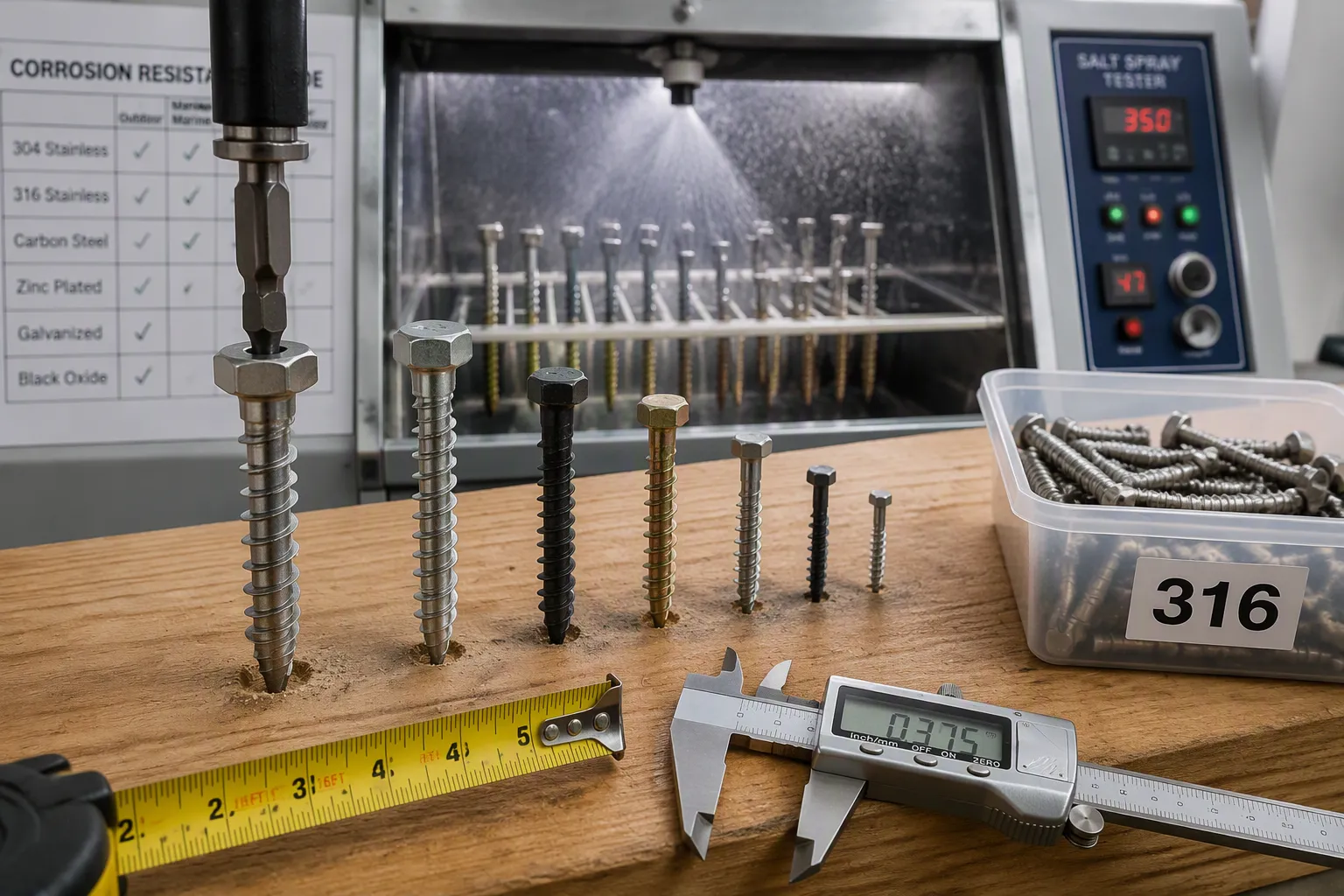
Screw selection depends on three factors: size, steel grade, and corrosion resistance. Each factor affects connection strength and service life. A mismatched fastener undermines the entire assembly.
Stainless Steel 316/A4 (Passivated): > 500 hours salt spray exposure with no red rust. Superior corrosion resistance due to Molybdenum content.
Code Compliance and Material Matching
| Condition | Recommended Fastener |
|---|---|
| ACQ-treated wood, dry interior | G90 galvanized acceptable |
| ACQ-treated wood, exterior wet | Hot-dip galvanized minimum |
| ACQ-treated wood, coastal or ground contact | Stainless steel 304/316 |
FastenMaster Product Picks
LedgerLOK for Ledger Connections
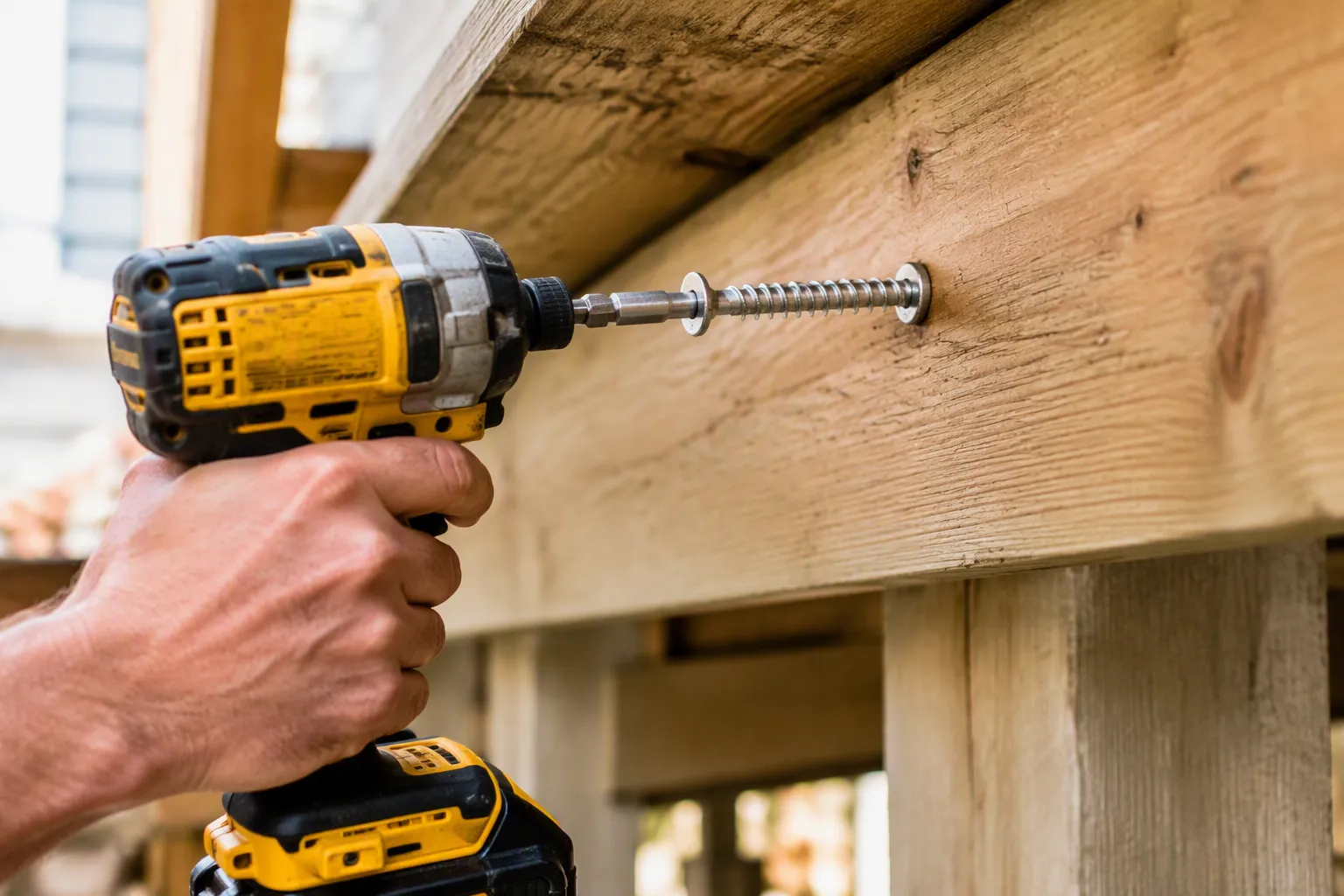
LedgerLOK structural screws solve the most critical connection in deck construction. These fasteners attach ledger boards directly to rim boards and house framing.
TimberLOK and ThruLOK for Framing
TimberLOK structural screws handle general timber framing with ease. These fasteners replace traditional lag bolts in most wood-to-wood applications.
The right hex head structural screws separate a durable connection from one that fails inspection or succumbs over time. Match the fastener precisely to the load demands, material compatibility, and applicable building codes.
FAQ
Do structural screws require pilot holes?
No, most hex head structural screws feature self-drilling tips. The sharp thread eliminates pre-drilling in standard timber species.
What corrosion protection suits coastal installations?
Specify 316 stainless steel for coastal or marine work. This grade passes 500+ hours salt spray testing with no red rust.
How do structural screws differ from lag bolts?
Structural screws eliminate the two-step installation of lag bolts. The hex head accepts high torque for faster driving and stronger connections.