


 Decking Screws
 Drilling Screws


Pozi Drive vs Phillips Chipboard Screws for Furniture Assembly
For furniture assembly, Pozidriv chipboard screws outperform Phillips due to reduced cam-out and higher torque transfer. Pozidriv screw heads grip driver bits firmly. Phillips screw slots taper and slip under load. Cam-out strips screw heads and damages wood panels. Weak joints frustrate cabinetry work. Pozidriv screws minimize cam-out. Phillips screws demand more downward force. Tool compatibility matters. Pozidriv bits fit Pozidriv screws. Phillips bits fit Phillips screws. Matching tools prevents screw damage and ensures reliable results.
Key Takeaways
- Pozidriv screws grip the driver firmly and resist slipping, so you can tighten furniture joints without damaging the screw head.
- Always match the screwdriver bit to the screw type: use a PZ bit for Pozidriv screws and a PH bit for Phillips screws to avoid stripping.
- For furniture assembly, choose Pozidriv screws for strong, reliable joints; keep Phillips screws for older or automated projects.
Chipboard Screws: Drive Types Compared
Chipboard screws come with two common cross-head drives. Each drive type changes how the screwdriver engages the screw. The overall design comparison below highlights the structural differences between these two drives.
| Attribute | Phillips | Pozidriv |
|---|---|---|
| ISO cross-recess designation | Type H | Type Z |
| Main cross structure | Four main arms forming a simple cross recess | Four main cross slots plus additional radial features between them |
| Driver compatibility | Requires a PH driver | Requires a PZ driver; PH and PZ are not interchangeable |
What Is a Phillips Screw?
The Phillips screw was invented in the early 1930s by Henry F. Phillips, a Portland, Oregon businessman. He acquired the design from John P. Thompson. The Phillips screw was engineered for higher torque and a deliberate cam-out effect under excessive torque. A self-centering pointed bit made it especially suited for assembly line and factory use.
Cam-out means the screwdriver tip slips out of the screw head. This action strips the head and damages surrounding wood. Phillips screws use a simple cross design with angular, tapered cross slots. These slots self-center the driver but cam out under high torque. This design suits automated assembly lines. Manual furniture assembly often suffers from this slipping.
What Is a Pozidriv Screw?
A pozidriv screw has four main cross slots plus additional radial features between them. These extra points create a firmer grip for the driver bit. The pozidriv screwdriver has an additional smaller cross. This design allows better torque transmission and reduces the risk of cam-out compared with the simpler Phillips design.
You can identify pozidriv screws by tick marks between the cross slots. Phillips screws do not have these marks. Pozidriv is often labeled PZ. This drive type is common in furniture applications in many markets. Pozidriv screws are better suited to high-torque environments such as power tool usage. Despite their similar appearance, Phillips and Pozidriv drivers and screws are not interchangeable. Using the wrong driver can damage the tool and reduce efficiency.
Phillips Screw Geometry
The Phillips drive relies on a simple cross recess with four tapered slots. This geometry defines how the driver bit engages the screw and how force moves through the joint. Two behaviors matter most for furniture assembly: self-centering and cam-out.
Cross Slots and Self-Centering
The tapered cross slots guide the driver bit toward the center of the screw head. A pointed bit slides into place with minimal alignment effort. This self-centering property suits automated production lines that use powered screwdrivers.
The importance of the crosshead screw design lies in its self-centering property, useful on automated production lines that use powered screwdrivers.
A robotic driver can approach the screw from a slight offset and still seat correctly. The recess locks the bit centrally, which enables straight, wobble-free installation at high volume. Precision Phillips II geometry refines this behavior for high-speed automated industrial assembly. Manual users benefit too. The bit finds the slot quickly, which speeds up repetitive work on flat-pack furniture.
Cam-Out Tendency
The same tapered walls that center the bit also push it outward. Under load, the angled slot faces convert part of the applied torque into axial ejection force. The driver climbs out of the recess instead of turning the screw. This effect is called cam-out.
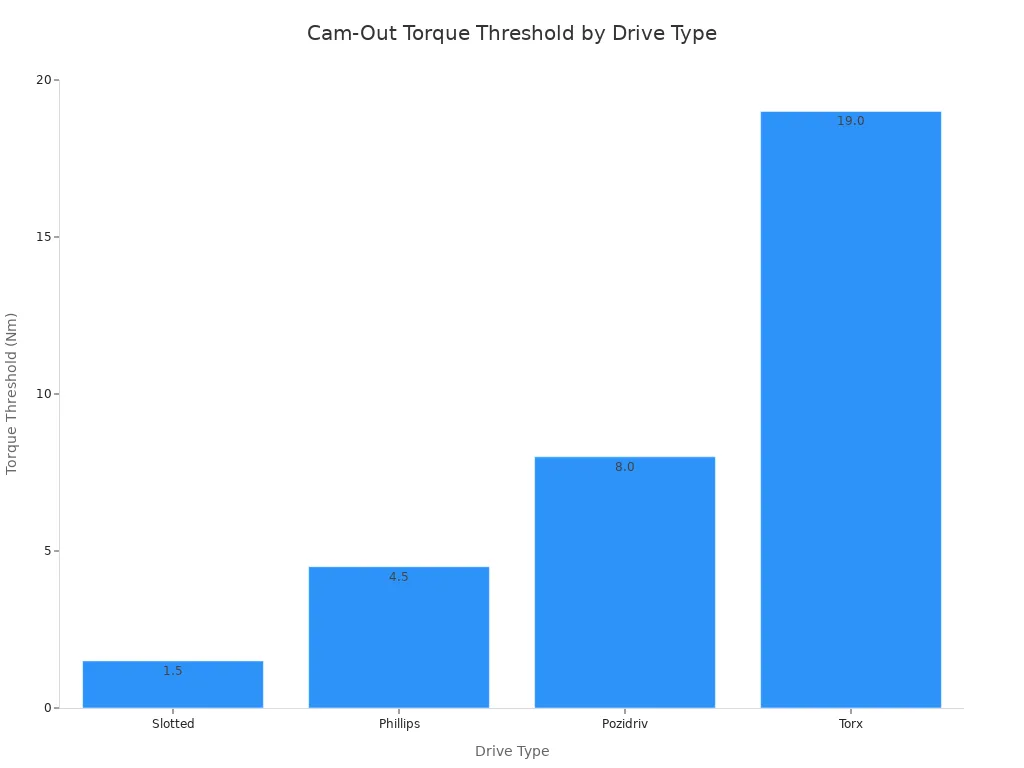
Cam-out limits how much torque reaches the joint. Published drive comparisons place the cam-out threshold of a Phillips screw near 4.5 Nm, well below the roughly 8.0 Nm of a pozidriv screw. Tapered walls convert a substantial share of applied torque into ejection force, and a Phillips #8 screw in hardwood cams out in roughly one in five attempts. The result is insufficient clamping force, higher stripping risk, and weaker furniture joints. A stripped head also scars the surrounding wood surface. Pozidriv geometry addresses this weakness directly, which is why it dominates flat-pack and cabinet work.
Pozidriv Screw Geometry
The Pozidriv recess improves on the Phillips cross by adding material where the driver meets the head. This geometry changes how force moves through the joint and how long the head survives repeated driving.
Additional Cross Points
A Pozidriv screw head contains four small radial indentations set at 45 degrees to the main cross. These marks sit in each quadrant of the recess. Phillips screws have smooth corners with no such features. The radial lines serve as a visual identifier. They also signal a different internal geometry.
The recess walls run nearly parallel from top to bottom. Phillips walls taper inward toward the bottom. This parallel shape lets the driver tip seat without wedging. The tip does not push outward as torque rises. The four radial indentations increase the mating surface area between driver and head. This design delivers improved grip and better grip under load. The driver stays engaged even at higher torque. A Pozidriv screw resists slipping far better than a Phillips screw in dense wood.
Torque Transfer
The parallel flanks and radial points work together to transmit force more directly. A Phillips driver allows more movement between bit and head. Torque transfer becomes less direct as a result. A Pozidriv screwdriver keeps firm contact across more points. This contact spreads pressure and reduces strain on the head.
The table below compares the two recess designs under load.
| Feature | Phillips Recess | Pozidriv Recess |
|---|---|---|
| Wall shape | Tapered inward | Nearly parallel |
| Retention | Wedging action | Parallel contact |
| Identification marks | None | Radial marks in each quadrant |
| Grip under load | Driver rides up and out | Driver stays engaged |
Torque and Stripping
Cam-Out Resistance
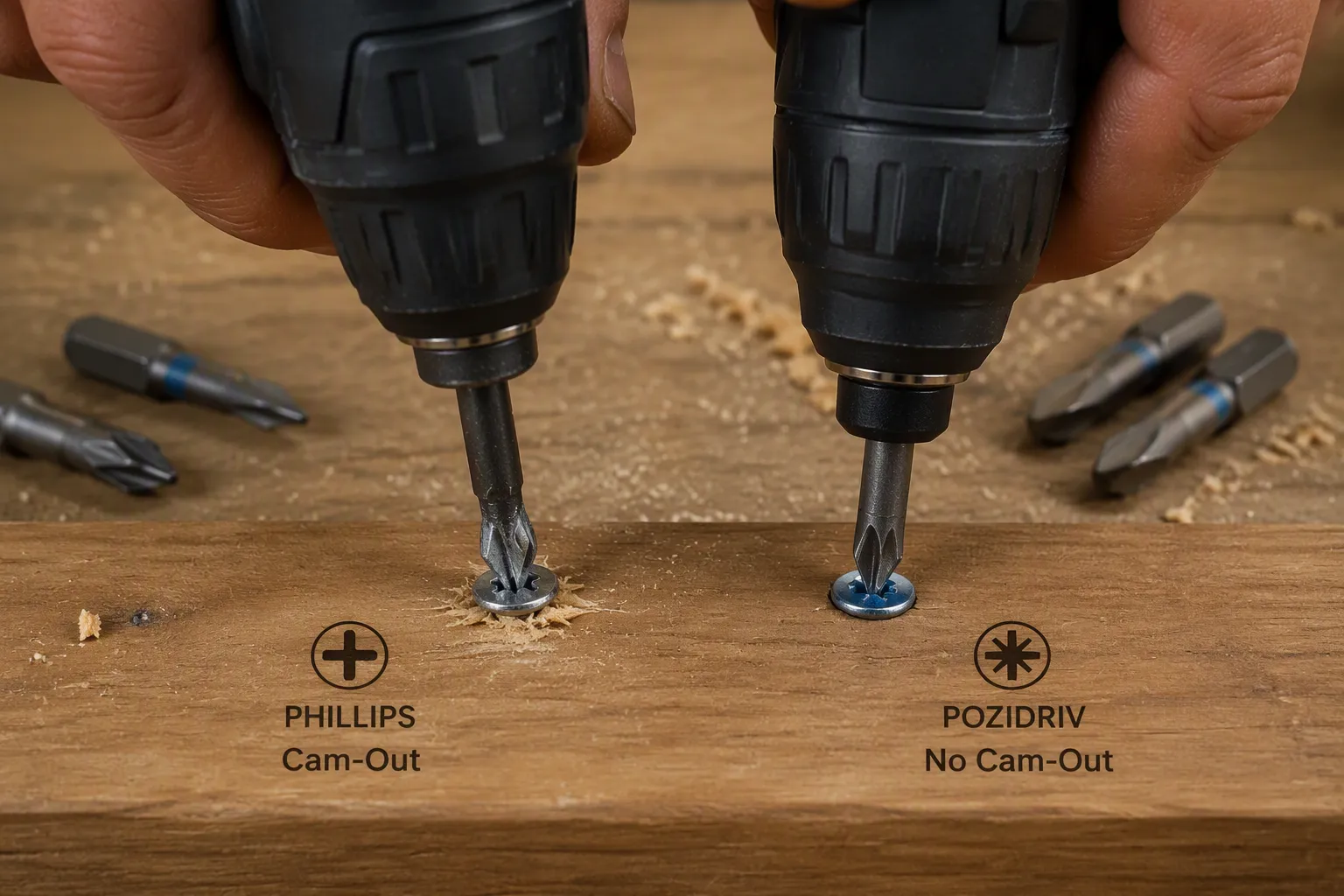
The core performance difference between these two drives appears under torque. Manual furniture assembly requires the screw to seat fully without slipping. A phillips screw forces the driver bit upward as resistance increases. The tapered recess walls create an ejection force. This force causes cam-out. The bit loses engagement. The phillips stops turning. The user must apply more downward pressure. Each cam-out event damages the phillips screw head and may gouge the surrounding wood.
A pozidriv screw resists cam-out through its parallel recess walls and radial indentations. The driver bit stays seated. Torque transfers directly into the pozidriv. The difference in cam-out behavior illustrates the contrast between the two drives.
| Drive Type | Cam-Out Behavior | Notes |
|---|---|---|
| Phillips | Designed with tapered recess for controlled cam-out when excessive torque occurs | Allows more movement between bit and screw head, so torque transfer is less direct. |
| Pozidriv | Minimizes sliding/slippage; keeps bit seated | Transmits torque more directly from driver to screw; firmer feel under high torque. |
Stop if you feel the screw spinning without biting. That is the sign of a stripped hole, not a reason to push harder. Removing the screw, adding a wooden toothpick or two with a dab of wood glue into the hole, and letting it dry before reinserting the screw is a widely used, effective fix for particleboard.
One stripped hole means a trip to the hardware store or a permanently wobbly piece. Hardware-based furniture degrades after 3 to 5 cycles. Every hardware connection is a future failure mode.
Screws used in MDF have very coarse threads for a reason: as it more or less lacks true grain, the material is notorious for screw threads pulling out. Knockdown hardware bolts are a very common failure point.
Head Wear Over Time
Repeated driving cycles wear down screw recesses. Phillips screws suffer more wear. The phillips design forces the bit upward under load. The tapered walls concentrate force on a smaller contact area. Each cam-out event scrapes material from the recess walls. The head becomes rounded. Pozidriv screws resist this wear. The parallel walls distribute force evenly across the contact surfaces. A pozidriv screw seats firmly without wedging. The radial indentations add extra grip points. A phillips screw lacks these features and experiences more wear. Anti-slip performance keeps the driver seated. No scraping occurs. The screw continues to grip the driver bit reliably.
Tool Interchangeability
Phillips and Pozidriv drivers look similar at a glance. This similarity leads many DIYers to assume the bits work in either screw head. That assumption causes damage. The two recess geometries differ enough that cross-use produces poor fit, cam-out, and stripped heads. Matching the driver to the drive type is the single most effective habit for clean furniture assembly.
Phillips Bit on Pozidriv Screw
A Phillips bit can enter a Pozidriv screw head. The bit turns the screw at low torque. Problems appear as resistance rises. The Phillips bit sits loosely and at an incorrect angle in the screw head. Turning force grinds against the edges of the head instead of driving the screw. Metal shavings appear after a few rotations. The screw becomes effectively ruined or unusable.
| Driver Used | Screw Type | Fit | Consequence |
|---|---|---|---|
| Phillips | Pozidriv | Fits and can turn | Liable to slippage; can damage the screw |
| Pozidriv | Phillips | Does not fit | Attempt will probably fail; likely to damage the screw |
Pozidriv Bit on Phillips Screw
A Pozidriv bit does not seat properly in a Phillips screw head. The extra radial points on the Pozidriv tip have no matching recess in the Phillips geometry. Forcing the bit into the head chews up the recess rapidly. Stripping can occur within seconds. Mixing these two systems is the quickest way to damage a screw.
Phillips screws require a PH driver. Pozidriv screws require a PZ driver. The two are not interchangeable. A Pozidriv bit on a Phillips screw will not drive the fastener reliably. The bit wobbles. The recess rounds out. The joint fails. Keep PH bits with Phillips screws and PZ bits with Pozidriv screws. This simple rule prevents cam-out, protects the wood, and extends tool life.
Recommendations for Furniture Assembly
When to Choose Pozidriv
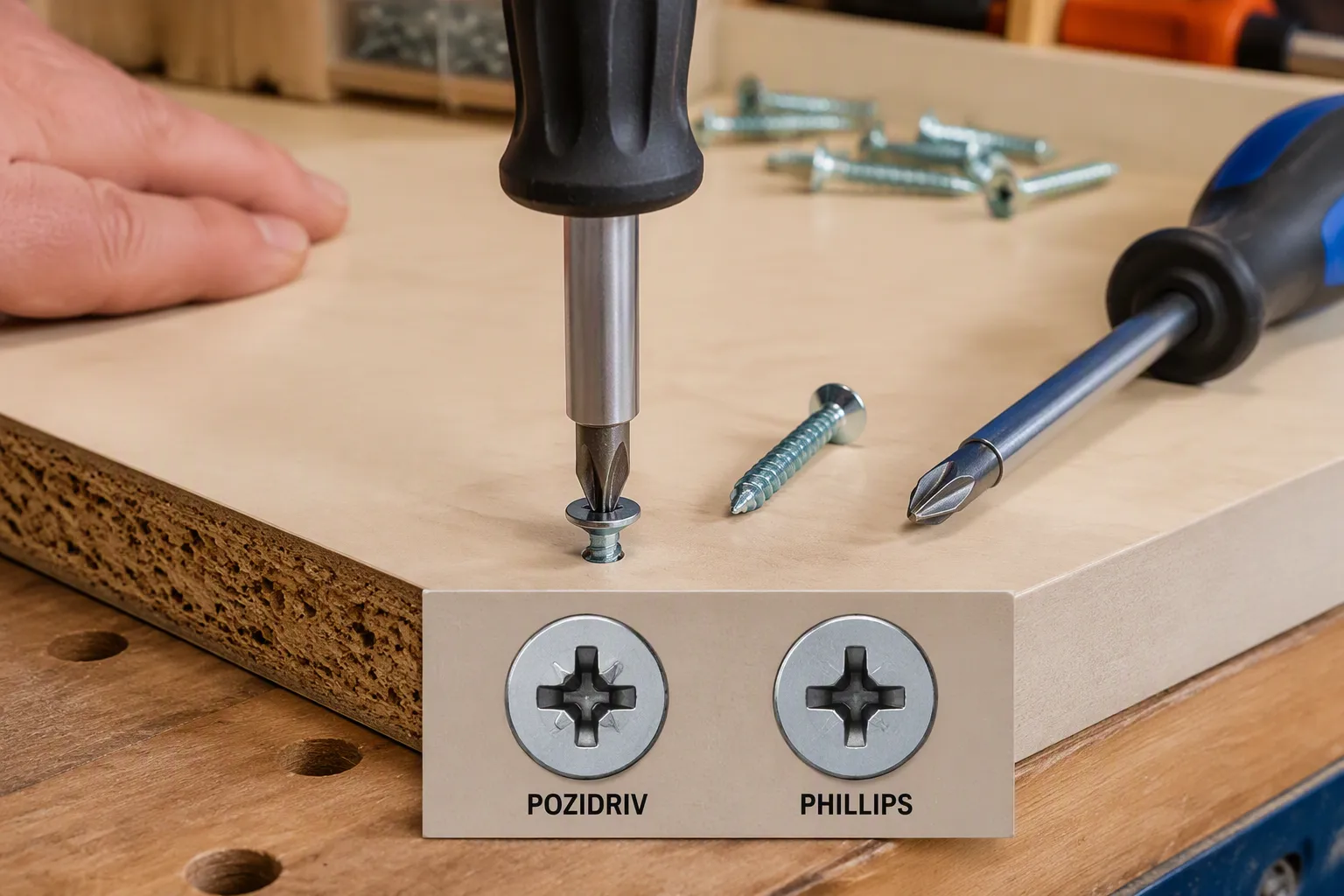
Manual furniture assembly rewards the drive with the firmest hold. Pozidriv screws deliver that hold. Their parallel recess walls and radial points keep the driver seated under load. This geometry raises the cam-out threshold and transfers more turning force into the joint. Professionals recommend Pozidriv for high-torque furniture assembly projects because of its greater torque resistance and reduced cam-out.
For assembly-line and flat-pack furniture projects, professionals favor Pozidriv because it resists cam-out at higher torque, ensuring repeatable engagement over easy release.
Professionals recommend Pozidriv for assembling IKEA furniture (since most IKEA screws are Pozidriv) and for European hardware, which also use Pozidriv drive screws.
Cabinet work and flat-pack kits belong in this category. A pozidriv screw seats with a firm grip and resists slipping in dense wood. That grip protects the panel surface during installation. Choose Pozidriv for cabinetry, IKEA-style kits, and any joint that demands secure fastening.
When Phillips Makes Sense
Phillips screws still earn a place in the toolbox. Their main advantage is availability. A Phillips head screwdriver is commonly used in furniture assembly. It is listed as a necessary tool for efficient assembly. Phillips screwdrivers are the most suitable tool for most furniture assembly tasks. They are commonly used in pop-up furniture. They provide better efficiency and reduced slippage. They offer a firm grip, making them ideal for furniture assembly.
Legacy hardware often carries Phillips recesses. Older cabinets and imported flat-pack kits may use them. Automated production lines also rely on Phillips geometry. The self-centering tip speeds robotic driving. Phillips screws remain useful for these cases.
Pozidriv screws beat Phillips screws on cam-out resistance and torque transfer. Phillips screws stay widely available. Use Pozidriv chipboard screws for furniture assembly and cabinetry. Keep Phillips screws for legacy hardware. Match every Pozidriv screw with a PZ bit, every Phillips screw with a PH bit. This grip protects wood, ensures reliable fastening, and delivers clean installation. Prioritize Pozidriv screws for strong joints.
FAQ
Can I use a Phillips bit on a Pozidriv screw?
No. A Phillips bit fits loosely in a pozidriv screw head. This mismatch causes cam-out and strips the head. Always match a PZ bit to a pozidriv screw.
Why do Pozidriv screws resist cam-out better than Phillips screws?
Pozidriv screws have parallel recess walls and radial indentations. These features maintain firm grip under load. Phillips screws use tapered slots that push the driver outward. This design difference explains the superior cam-out resistance of pozidriv.
Which drive type should I choose for furniture assembly?
Choose pozidriv screws for manual furniture assembly, cabinetry, and flat-pack kits. They deliver higher torque transfer and reliable grip. Phillips screws remain useful for legacy hardware. Match your bit to the drive for clean installation.