


 Decking Screws
 Drilling Screws


Why double countersunk chipboard screws matter in flat-pack furniture
Double countersunk chipboard screws matter because they prevent splitting, sit flush, and hold strong in particle board. These three payoffs—less splitting, a flush finish, stronger hold—make chipboard screws the right choice for flat-pack furniture. So why can't you just use any screw from your toolbox? Furniture assembly rewards the right fastener, and ordinary screws often fall short.
Key Takeaways
-
Double countersunk chipboard screws prevent splitting and keep the board surface clean.
-
These screws sit flush for a neat finish and hold strong in particle board.
-
Match the screw to your panel thickness and use pilot holes near edges for best results.
Double Countersunk Chipboard Screws Explained
The Two-Taper Head Design
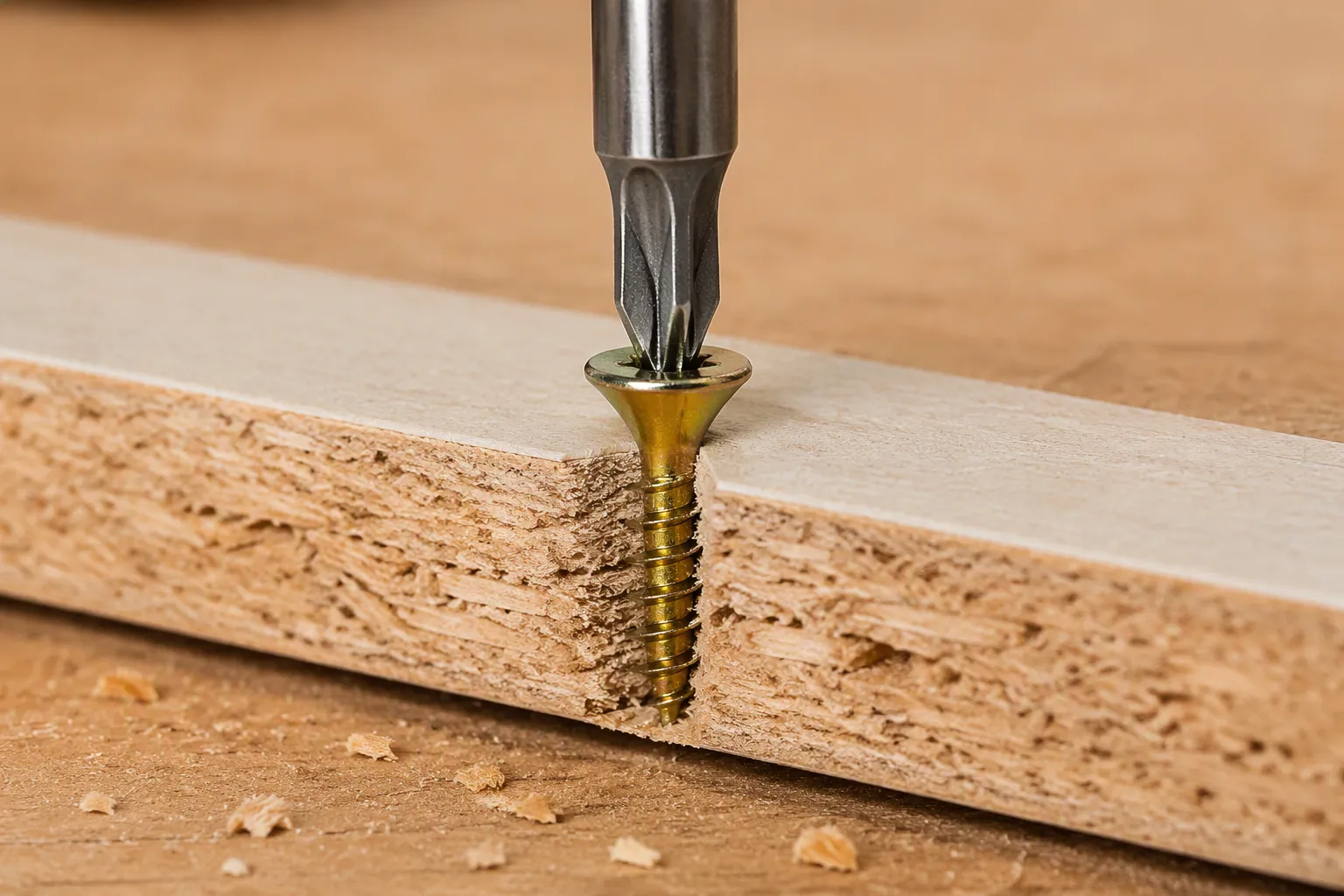
The defining feature of double countersunk chipboard screws is the head geometry. Two distinct tapers work in sequence. A lower cone compresses material and sinks into the board. An upper cone then seats against the surface. The result is a flat countersunk head that leaves a neat finish in compatible wood-based boards. This design separates double countersunk chipboard screws from simpler fasteners. The lower taper clears a path for the shank. The upper taper spreads load across a wider area of the panel face. Together, the two cones deliver a clean countersink for a flush finish without crushing the surrounding material. Proper countersinking depends on this staged cutting action. A single-angle head must do both jobs at once, and the board face often pays the price.
Why Particle Board Needs This Head
Particle board fibers cannot compress enough to absorb thread volume. The material is dense and unforgiving. Countersunk angle and depth therefore matter enormously. A double-countersunk head seats flush without chewing the laminate face. This matters in mdf and particle board, where a torn surface cannot be repaired easily. The flat countersunk head protects visible panels during assembly. Standard countersunk screw heads rely on compression. Particle board resists that compression. The double head cuts instead of crushes, and the surface stays intact. This is why furniture fasteners for flat-pack builds favor the double design. The same logic applies across mdf and particle board components, from shelf panels to cabinet sides.
Construction details reinforce the performance. Chipboard screws are usually steel, often with yellow zinc plating for corrosion resistance. Rolled threads are stronger than cut threads, and the coarse thread bites into wood fibers quickly. Coarse and deep threads grip the panel along the full screw length. A coarse thread also reduces the risk of loosening over time. Most applications need no pilot holes, though pilot holes near panel edges remain a sensible precaution. The combination of a protective head, a strong shank, and a coarse thread makes these screws dependable in chipboard and similar engineered boards. Proper countersinking, a secure hold, and a clean surface all come from one well-matched component.
Why They Matter in Furniture Assembly
Less Splitting and a Flush Fit
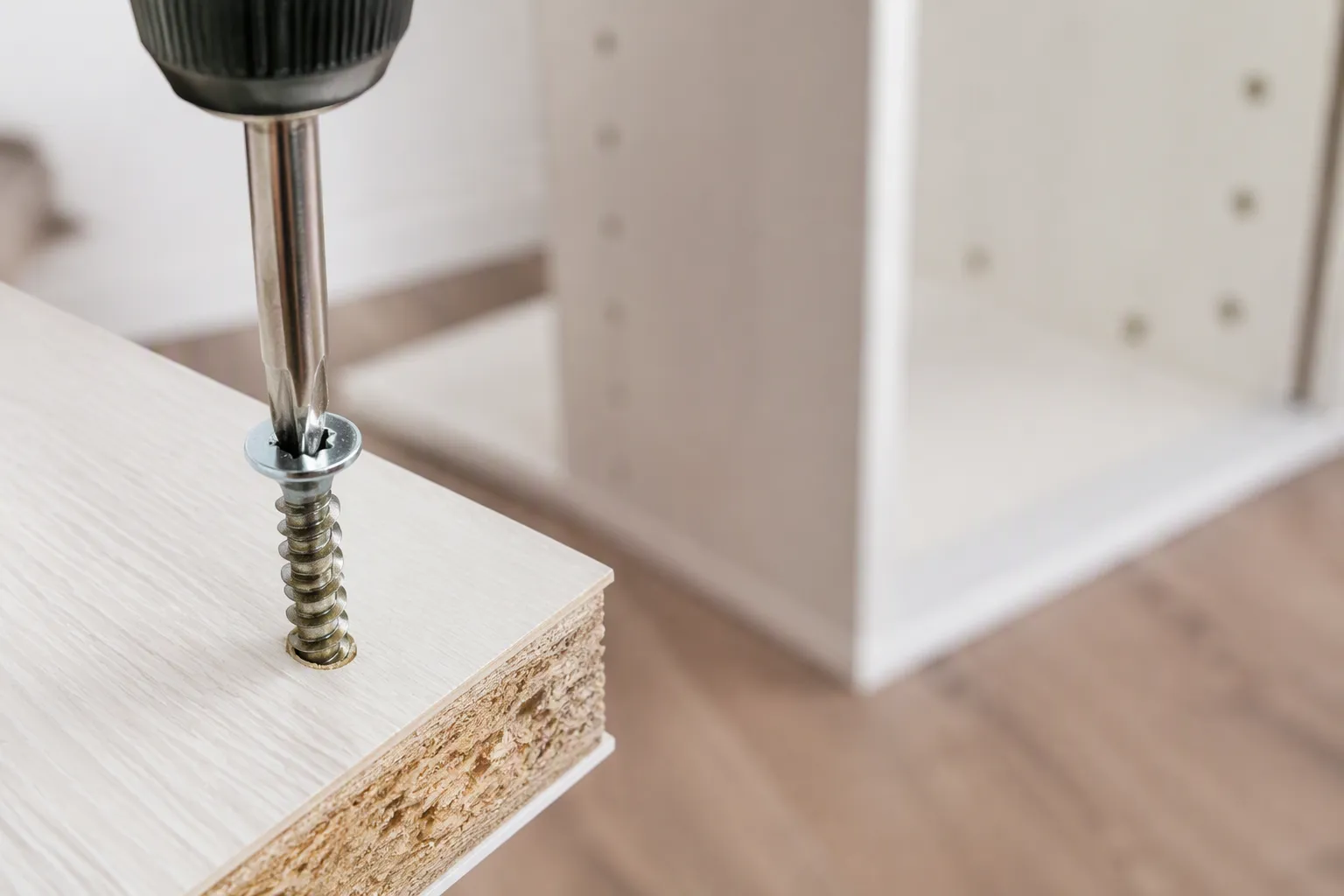
The head does more than finish the surface. It protects the board face during driving. Visible panels on desks, bookcases, chairs, and cabinet frames show every tear and crush mark. A torn face on a cabinet side cannot be hidden once the unit is assembled. A double countersunk chipboard screws design cuts a clean seat, so the countersunk head rests flush and the laminate stays intact. This protection against splitting matters most on panel edges, where particle board has little tolerance for stress. Proper countersinking spreads the load and keeps the joint tight. For anyone building rta furniture, this is the difference between a clean panel and a chipped one.
Strong Hold in MDF and Particle Board
Pull-out strength decides whether a joint survives daily use. A coarse thread bites into wood fibers quickly, and the full-thread design improves stability along the whole screw length. The coarse thread also reduces loosening over time. Most applications need no pre-drilling, though drilling pilot holes near panel edges remains wise. Drilling pilot holes prevents splits at the board edge, and pilot holes also guide the screw straight. Pilot holes also limit driver torque at the edge.
Matching the screw to the material matters. Single countersunk screws fit where a simpler flush head is enough. Confirmat screws suit heavy panel joints. Standard wood screws fit solid wood best. Each option has a place, and the right choice depends on the joint. For mdf and particle board, the recommended screws for mdf and particle board are chipboard screws with a double head. These furniture assembly screws deliver reliable furniture assembly in particleboard and mdf. Particle board rewards a well-matched screw, and mdf and particle board panels both benefit from a clean seat.
Sizing follows panel thickness. For 18mm cabinet sides, a #8 gauge screw at 38mm length works well. A 12mm light shelf takes a #6 at 25mm. Heavier drawers at 25mm call for a #10 at 50mm. Table legs at 38mm use a #10 at 63mm, and bed frames at 50mm use a #12 at 75mm. A universal rule: the screw should embed at least 10–12mm into the holding piece. Drill a 2.5mm pilot hole when screwing into chipboard edges. A screw that is too long breaks through the far face, and a screw that is too short holds weakly.
Check size, drive, point, coating before buying. Plated screws suit light outdoor use. Pre-drilling near panel edges helps. These furniture fasteners give maximum grip in particle board and chipboard. A countersink cut cleanly and a flush seat complete the job. Match the screw to the panel, and the joint will last.
Three reasons stand out: splitting prevention, flush seating, and reliable pull-out strength in particle board. Double countersunk chipboard screws deliver all three. Matching the screw to the material is the real takeaway, and these fasteners suit flat-pack furniture well.
Before your next furniture assembly, check your screw type. Proper countersinking, a coarse thread, and pilot holes near edges protect mdf and particle board panels. These furniture fasteners keep particleboard and mdf joints secure.
FAQ
Do chipboard screws need pilot holes in particle board?
Not usually. Most applications drive without pre-drilling. Drill pilot holes near panel edges, where particle board splits easily. A 2.5mm pilot hole guides the screw and limits torque at the edge.
What is the difference between a single and double countersunk head?
A single countersunk head relies on compression to seat. A double head cuts in two stages. The lower cone sinks, and the upper cone seats flush. This protects the board face during furniture assembly.
How do I choose the right screw length for my furniture project?
Match length and gauge to panel thickness. The screw should embed at least 10–12mm into the holding piece. A screw that is too long breaks through the far face. Too short holds weakly.