


 Decking Screws
 Drilling Screws


Wood Screw Size Chart: Diameter, Length and Pilot Hole Guide
The wood screw size chart below offers a quick pilot chart for immediate reference. Common wood screws, such as 2-inch, 1-inch, and 1.5-inch, suit most woodworking tasks. Matching screw and pilot hole size to the wood ensures joint strength and durability, as shown in the table. Fuertes Crew’s Advanced Multi-Purpose Wood Screws provide reliable, efficient fastening for every project. Look throughout this post for downloadable charts and practical tips.
|
Screw Size |
Optimal Pilot Hole Diameter (≤ 6 mm) |
Optimal Pilot Hole Diameter (> 6 mm) |
|---|---|---|
|
#6 |
70-75% of major diameter |
|
|
#8 |
70-75% of major diameter |
|
|
#10 |
80-85% of major diameter |
-
2-inch screws are most common for versatility.
-
1-inch and 1.5-inch screws excel in furniture assembly.
Key Takeaways
-
Select the right screw size for your project. Use the wood screw size chart to match screw diameter and length to your material thickness.
-
Always drill pilot holes, especially in hardwoods. This prevents splitting and ensures smooth screw installation.
-
Download the wood screw size chart for quick reference. Keep it handy during projects to improve accuracy and efficiency.
Wood Screw Size Chart
Diameter and Length Chart
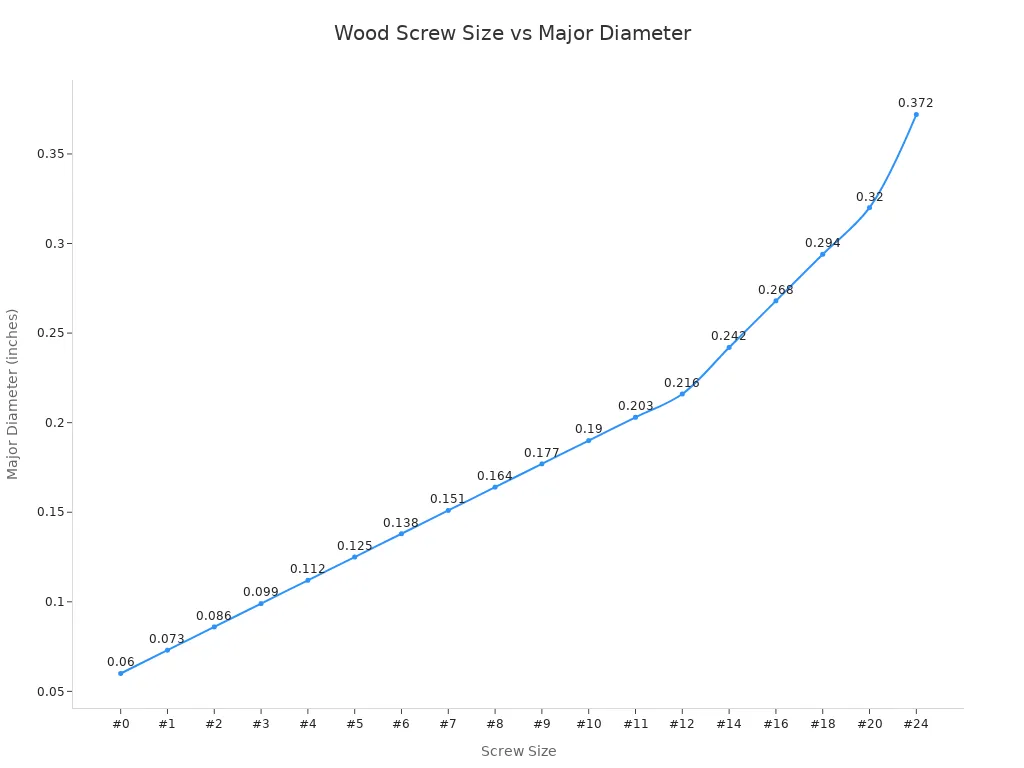
Selecting the right screw size is essential for strong, reliable joints in woodworking. The wood screw size chart below displays standard screw sizes, thread diameters, and major diameters as specified by leading manufacturers. This chart helps users quickly identify the correct diameter for their project. It also assists in matching the screw to the appropriate pilot hole size for both softwood and hardwood.
|
Screw Size |
Thread Diameter (Fraction) |
Major Diameter (inches) |
|---|---|---|
|
#0 |
1/16″ |
.060″ |
|
#1 |
5/64″ |
.073″ |
|
#2 |
3/32″ |
.086″ |
|
#3 |
7/64″ |
.099″ |
|
#4 |
7/64″ |
.112″ |
|
#5 |
1/8″ |
.125″ |
|
#6 |
9/64″ |
.138″ |
|
#7 |
5/32″ |
.151″ |
|
#8 |
5/32″ |
.164″ |
|
#9 |
11/64″ |
.177″ |
|
#10 |
3/16″ |
.190″ |
|
#11 |
13/64″ |
.203″ |
|
#12 |
7/32″ |
.216″ |
|
#14 |
1/4″ |
.242″ |
|
#16 |
17/64″ |
.268″ |
|
#18 |
19/64″ |
.294″ |
|
#20 |
5/16″ |
.320″ |
|
#24 |
3/8″ |
0.372″ |
-
#6 screw diameter is ideal for small objects. It has a thread size of 0.13″ and is available in lengths from ½″ to 1-½″.
-
#8 screw size is suitable for medium-duty tasks. It features a thread diameter of 0.16″ and comes in lengths from 5/8″ to 3″.
-
#10 screw size is used for heavier jobs. It offers a thread diameter of 0.19″ and is found in lengths from ¾″ to 4″.
Tip: Download or print the wood screw size chart for easy access during your projects.
How to Use the Size Chart
The wood screw size chart provides a fast reference for selecting the correct diameter and length. Follow these steps to ensure accurate selection:
-
Compare the drill bit size to the screw visually to check for fit.
-
Use a pilot hole drill guide to match sizes quickly.
-
Measure the screw diameter with a caliper for precision.
-
Refer to the chart for recommended drill bit sizes.
-
Check the screw packaging for size information.
-
Visit the manufacturer's website for detailed specifications.
-
Always measure the screw shank, not the threads. The pilot hole should match the shank diameter.
-
For hardwoods, increase the pilot hole size by one step to prevent splitting.
-
For softwoods, use the standard pilot hole size.
-
For screws longer than 2″, drill a deeper pilot hole.
-
For fragile screws, such as brass or stainless steel, drill slightly larger holes.
Fuertes Crew’s Advanced Multi-Purpose Wood Screws feature a self-drilling Type 17 point. This design allows the screw to penetrate dense materials easily. It reduces or eliminates the need for pre-drilling, which saves time and increases efficiency compared to traditional wood screws.
Note: Printable and downloadable versions of the wood screw size chart are available for your convenience.
Understanding Wood Screw Sizes
Screw Diameter Basics
The diameter of a wood screw determines its holding power and compatibility with different materials. Industry standards label screw size using either numbers or fractions in the US, or millimeters in the metric system. The nominal diameter, also known as the major diameter, is the primary measurement for identifying screw size. This value appears on packaging and technical specifications. The table below summarizes common measurement types and labeling systems:
|
Measurement Type |
Units |
|---|---|
|
Major Diameter |
Inches, mm |
|
Labeling System |
US (numbers/fractions), Metric (mm) |
Wood screws in the metric system use an 'M' prefix, followed by diameter and pitch. Imperial screws rely on fractional diameter and threads per inch. Understanding these systems helps users select the correct screw size for their project.
Length Selection Tips
Choosing the right length is essential for stability and appearance. If a screw is too short, it may not secure the joint. If it is too long, it can protrude and affect the finish. The thickness of the material also influences the size selection. The table below highlights key factors:
|
Factor |
Description |
|---|---|
|
Length |
Too short screws cause instability; too long screws may protrude and impact aesthetics. |
|
Thickness |
Gauge must be appropriate; thin screws may pull out, thick screws can split wood. |
|
Pilot Holes |
Pilot holes are recommended for hardwoods to prevent splitting. |
Drilling pilot holes is especially important in hardwoods. Softwoods are less prone to splitting, so standard pilot holes often suffice.
Thread Types Overview
The thread type affects how a screw interacts with wood. Fine threads work best in hardwoods, providing superior holding power. Coarse threads excel in softwoods, offering easier driving and better grip. The table below compares thread types:
|
Thread Type |
Best For |
Holding Power Impact |
|---|---|---|
|
Fine Threads |
Hardwoods (e.g., oak) |
Superior holding power, ideal for stability |
|
Coarse Threads |
Softwoods (e.g., pine) |
Better grip, easier and faster to drive in |
-
Fine-thread screws can increase pullout strength by up to 30%.
-
Coarse threads are preferred for quick assembly in softer woods.
Tip: Match the thread type to the wood for optimal performance and durability.
Choosing the Right Screw
Material and Application Factors
Selecting the right screw for your project depends on several important criteria. The type of wood, the environment, and the load the joint will bear all play a role. The table below outlines the main factors to consider when choosing wood screws:
|
Criteria |
Description |
|---|---|
|
Material Compatibility |
Choose screws that match your wood and environment. |
|
Load-Bearing Capacity |
Use screws rated for the weight your project will support. |
|
Environmental Conditions |
Pick corrosion-resistant screws for outdoor or wet locations. |
|
Length and Diameter |
Select the right size to avoid damaging your materials. |
Fuertes Crew’s Advanced Multi-Purpose Wood Screws offer high strength and corrosion resistance. These screws perform well in both indoor and outdoor settings, making them suitable for a wide range of applications.
Matching Screw to Wood Type
Wood type affects screw selection. Softwoods, such as pine, work best with coarse thread screws. These provide a strong grip and often do not require a pilot hole. Hardwoods, like oak or maple, need fine thread screws for a tight hold. Always drill a pilot hole in hardwoods to prevent splitting. Fuertes Crew screws feature a self-drilling Type 17 point, which reduces the need for pre-drilling in many materials.
|
Material Type |
Corrosion Resistance |
Strength |
|---|---|---|
|
Steel |
Low |
Good |
|
Stainless Steel |
High |
Excellent |
|
Epoxy-Coated |
Very High |
Good |
Common Wood Screw Pilot Hole Sizes
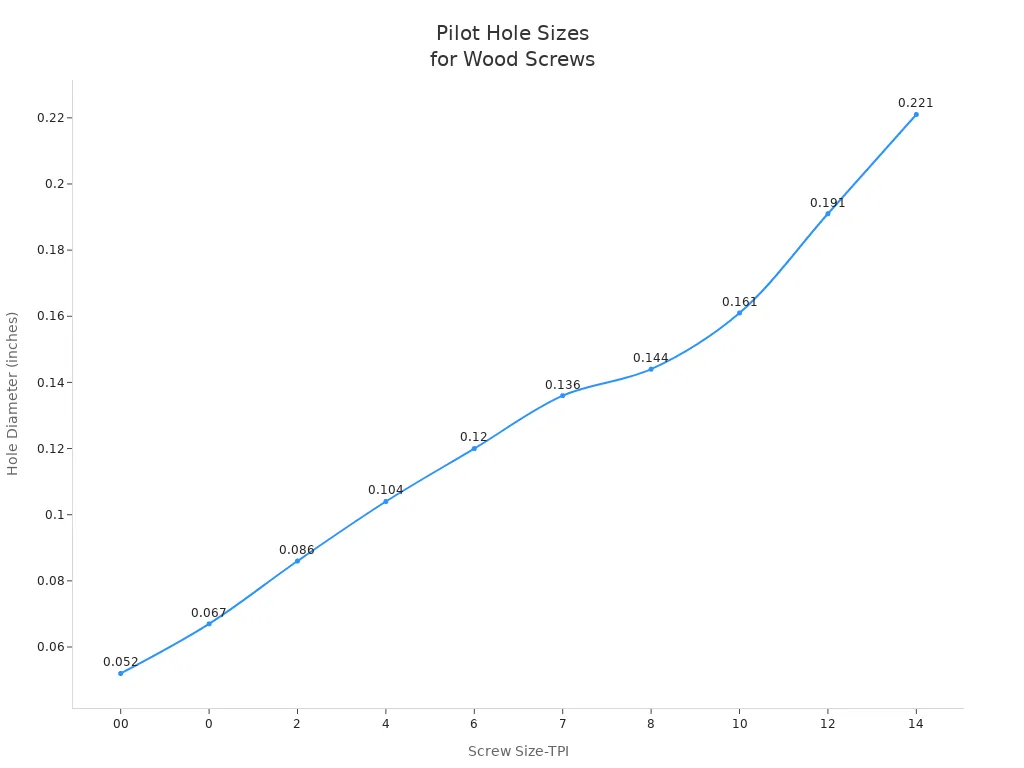
Using the correct pilot hole size ensures the screw drives smoothly and prevents wood damage. The table below lists common wood screw pilot hole sizes for furniture and cabinetry work:
|
Screw Size-TPI |
Recommended Hole Diameter |
Drill Bit Size |
|---|---|---|
|
00 |
0.052" |
#55 |
|
0 |
0.067" |
#51 |
|
2 |
0.086" |
#44 |
|
4 |
0.104" |
#37 |
|
6 |
0.120" |
#31 |
|
7 |
0.136" |
#29 |
|
8 |
0.144" |
#27 |
|
10 |
0.161" |
#20 |
|
12 |
0.191" |
#11 |
|
14 |
0.221" |
#2 |
Tip: Always match the pilot hole to the screw size for best results and to avoid splitting the wood.
Wood Screw Pilot Hole Guide
Why Pilot Holes Matter
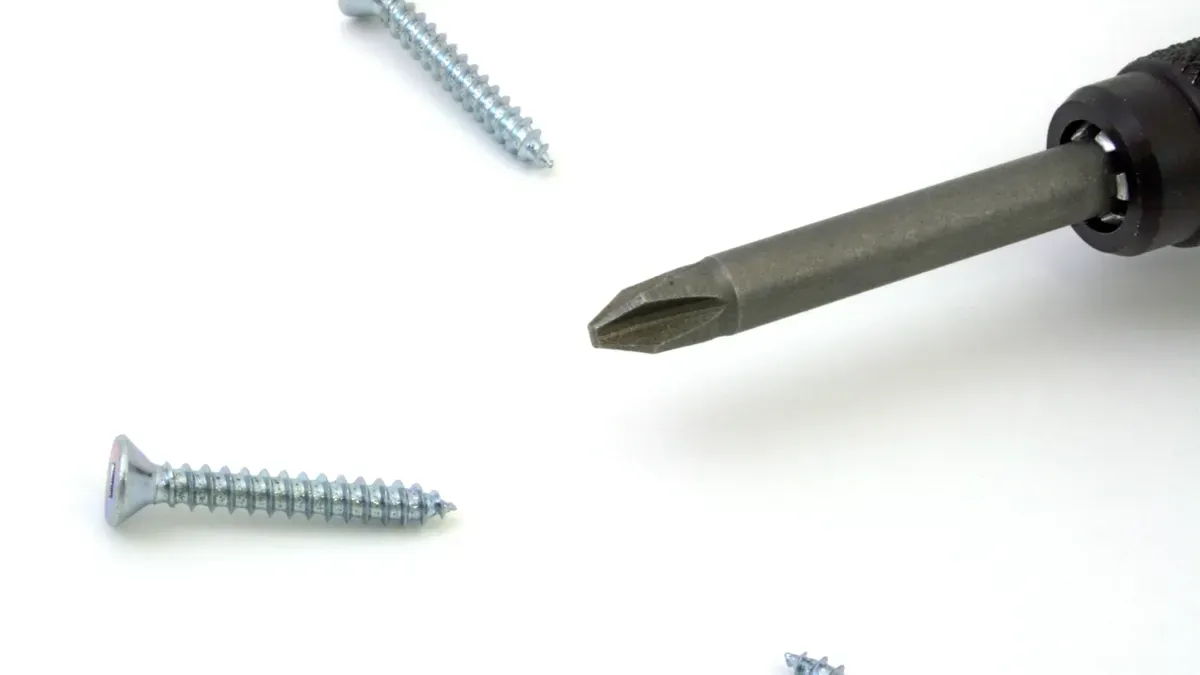
Pilot holes play a crucial role in woodworking. They help guide the screw into the material and reduce the risk of wood splitting. When a screw is driven without a pilot hole, it forces the wood apart, which increases pressure and can cause cracks. Using the correct pilot hole size allows the screw to cut into the wood smoothly. This minimizes the force needed and protects the integrity of the joint.
-
A pilot hole that is too small increases the risk of damage. The screw forces the wood rather than allowing it to accommodate the threads.
-
The right pilot hole sizes ensure the threads grip the wood effectively and prevent splitting.
-
For hardwoods, a slightly larger pilot hole is recommended to avoid cracking.
Tip: Always use a pilot hole size guide to match the screw diameter and wood type. This practice improves the strength and appearance of your finished project.
Wood Screw Pilot Hole Chart
Selecting the recommended hole diameter for each screw size is essential for strong joints and smooth installation. The wood screw size chart below provides a comprehensive pilot hole size guide for both softwood and hardwood. It includes recommended hole diameter values for common wood screw pilot hole sizes, as well as lag bolt pilot hole size recommendations.
|
Screw Size |
Major Diameter (in) |
Recommended Hole Diameter (Softwood) |
Recommended Hole Diameter (Hardwood) |
Lag Bolt Pilot Hole Size (Softwood) |
Lag Bolt Pilot Hole Size (Hardwood) |
|---|---|---|---|---|---|
|
#6 |
0.138 |
0.096 |
0.106 |
0.096 |
0.106 |
|
#8 |
0.164 |
0.112 |
0.122 |
0.112 |
0.122 |
|
#10 |
0.190 |
0.136 |
0.146 |
0.136 |
0.146 |
|
#12 |
0.216 |
0.160 |
0.170 |
0.160 |
0.170 |
|
#14 |
0.242 |
0.184 |
0.194 |
0.184 |
0.194 |
-
For softwoods, select a drill bit that matches the root diameter of the screw.
-
For hardwoods, choose a drill bit that is typically 1/64" larger than the screw's root diameter.
-
The pilot hole should be smaller than the screw's major diameter to ensure the threads grip effectively.
Note: Avoid matching the drill bit size directly to the screw size. Instead, size the pilot hole to the screw’s minor diameter. This ensures the threads bite into the wood and provide a secure hold.
The chart above also includes lag bolt pilot hole size recommendations. Lag bolts require larger pilot holes due to their thicker diameter and deeper threads. Always refer to the pilot hole size guide for the right pilot hole sizes before installation.
Downloadable Pilot Hole Size Chart
A downloadable pilot hole size chart offers convenience for professionals and DIY enthusiasts. This free downloadable pilot hole chart provides quick access to recommended hole diameter values for all common wood screw pilot hole sizes. It helps users select the correct pilot hole sizes for both softwood and hardwood, as well as lag bolt pilot hole size options.
-
The downloadable pilot hole size chart is formatted for easy printing and reference.
-
It includes a wood screw size chart, pilot hole size guide, and lag bolt pilot hole size recommendations.
-
Users can keep the chart in their workshop or toolbox for fast access during projects.
Tip: Fuertes Crew’s Advanced Multi-Purpose Wood Screws feature a self-drilling Type 17 point. This design reduces or eliminates the need for pilot holes in many cases, especially in softwoods and engineered materials. For hardwoods or dense materials, consult the pilot hole size guide to ensure optimal results.
The downloadable pilot hole size chart simplifies the process of selecting recommended hole diameter values. It ensures that every screw is installed with the right pilot hole sizes, preventing splitting and improving joint strength. Professionals and hobbyists alike benefit from having a free downloadable pilot hole chart available for reference.
Installation Steps
Tools Checklist
Before starting, gather the essential tools for installing wood screws and preparing pilot holes. The table below outlines the most useful tools for drilling accurate pilot holes and achieving a professional finish:
|
Tool Type |
Description |
|---|---|
|
Counterbore Bit |
Drills a pilot hole and a larger flat-bottomed hole to hide the screw head and allow for wooden plugs. |
|
Countersink Bit |
Creates an inverted pyramid divot for the screw head to sit flush with the wood surface. |
|
Drill Bit Guide |
Helps maintain the drill bit perpendicular to the surface for accurate drilling. |
|
Drill Bit Stop Collar |
Prevents drilling too deep, ensuring the pilot hole is the correct depth. |
Tip: Use a drill bit stop collar and a guide to control depth and angle for best results.
Drilling the Pilot Hole
To create a pilot hole, select the correct drill bit size for your screw. Keep the drill straight and apply steady pressure. Clear wood chips from the bit to prevent binding. For hardwoods, drill the pilot hole to two-thirds the screw length. For softwoods, half the screw length is sufficient. Use tape on the drill bit as a depth gauge if needed. Inspect the pilot hole for straightness and depth before inserting the screw.
Installing Screws
Choose the right screw type and head style for your material. Set torque drivers between 1.8 and 2.5 Newton meters for optimal tightening. Tighten screws gradually in three steps to allow the wood fibers to adjust. This method reduces the risk of stripping and ensures a secure hold.
Preventing Splitting and Stripping
Always pre-drill a pilot hole, especially near edges or in thin wood, to prevent splitting. Use the correct bit size to avoid cam-out and stripping. Drilling pilot holes and using the right technique will help maintain the strength and appearance of your project.
Selecting the right screw and pilot hole is vital for strong, safe woodworking. Common mistakes include skipping pilot holes or choosing the wrong screw size, which can cause splitting or weak joints.
-
Pre-drilled pilot holes prevent wood from splitting and make installation easier.
-
Step-by-step guides and a wood screw size chart improve accuracy and safety.
Using incorrect screw sizes can compromise the strength of the joint, leading to issues such as the screw holding the pieces apart and inadequate contact for glue bonding. This can ultimately affect the durability of the woodwork.
Fuertes Crew’s Advanced Multi-Purpose Wood Screws offer efficiency and versatility for any project. Download or print the chart for quick reference and better results.
FAQ
What is the best way to choose a wood screw size?
Refer to the wood screw size chart. Match the screw diameter and length to your material thickness and application for optimal strength.
Do I need to drill a pilot hole for all wood screws?
-
Pilot holes are essential for hardwoods and dense materials.
-
Fuertes Crew’s self-drilling screws often eliminate this step in softwoods.
Can Fuertes Crew screws be used outdoors?
Yes. The anti-corrosion coatings, including zinc yellow passivation and stainless steel, provide excellent durability for outdoor and humid environments.